INTRODUCTION
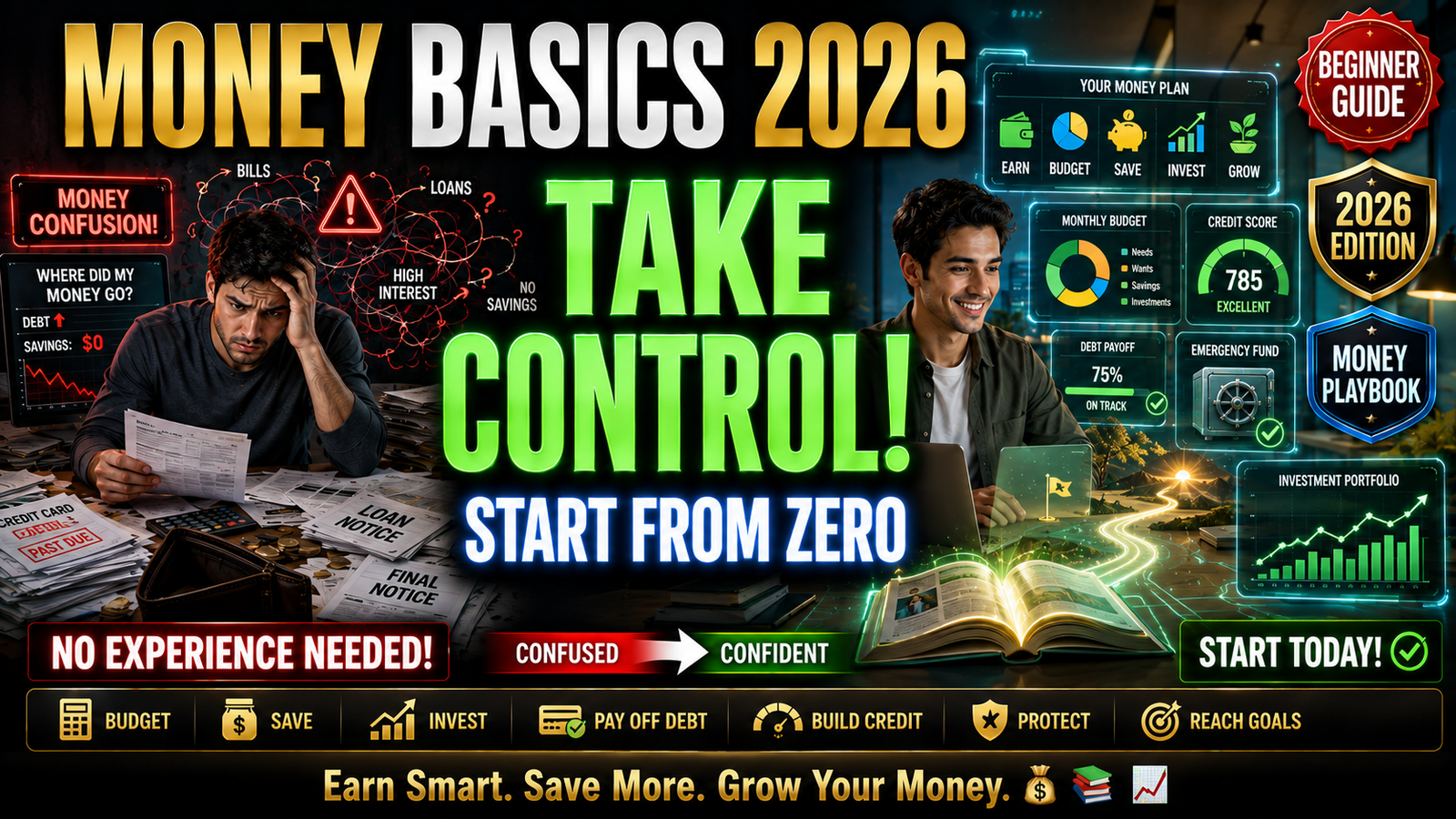
Financial literacy is the foundation of every smart money decision. It is the ability to understand and use financial skills like budgeting, saving, investing, and managing debt. In 2026, this knowledge is more critical than ever. Recent data shows that Americans correctly answered less than half of financial literacy questions in a major national survey, the lowest result in a decade. Yet, those who understand personal finance are four times less likely to struggle to make ends meet and three times less likely to be financially fragile.
This guide is designed for beginners. If financial terms feel overwhelming or you are unsure where to start, you are in the right place. We will break down the basics into clear, actionable steps and show you how to build a secure financial future, one decision at a time.
WHAT IS FINANCIAL LITERACY AND WHY DOES IT MATTER?
Financial literacy is the ability to understand and effectively use various financial skills, including personal financial management, budgeting, and investing. It is the knowledge that empowers you to make informed decisions about your money.
Research identifies three key dimensions of financial literacy:
- Financial Knowledge: Understanding concepts like interest rates, inflation, risk, and how credit works.
- Financial Attitude: Having the mindset and confidence to make financial decisions.
- Financial Behavior: The actual actions you take to manage your money effectively.
The consequences of low financial literacy are severe. Those who lack it are more likely to be financially fragile and struggle to cover everyday expenses. On the other hand, adults who have received financial education score significantly higher on financial literacy tests, demonstrating that these skills can be learned. The growing recognition of this has led 39 states to require a personal finance course for high school graduation, up from 35 just a year prior.
THE CORE COMPONENTS OF FINANCIAL LITERACY
To be financially literate, you need a basic understanding of several key areas.
Budgeting and Cash Flow Management
At its core, personal finance is about managing the flow of money in and out of your life. A budget is simply a plan for your money. The first step is tracking your income and expenses to understand where your money is going. A simple framework to start is the 50/30/20 rule:
- 50% for Needs: Rent, groceries, utilities, transportation, minimum debt payments.
- 30% for Wants: Dining out, entertainment, subscriptions, hobbies.
- 20% for Savings and Debt Repayment: Building an emergency fund, contributing to retirement, and paying down extra debt.
The Power of Saving and Compound Interest
Saving isn’t just about putting money aside; it’s about letting it grow. Compound interest is the interest you earn on your interest. Even small, regular savings can grow into significant sums over time, making it the most powerful force in personal finance. Starting early gives your money more time to compound.
Understanding Credit and Debt
Credit is a tool, but it can be a dangerous one if not understood. Your credit score is a number that tells lenders how reliable you are at repaying money. It is influenced by factors like payment history and how much of your available credit you use. A good credit score can save you thousands of dollars over your lifetime through lower interest rates on loans and mortgages.
High-interest debt, like credit card debt, can quickly spiral out of control. The key is to understand the trade-offs. For example, using a “Buy Now, Pay Later” (BNPL) plan might make a large purchase feel affordable with small payments, but missing a payment could lead to late fees and damage to your credit score. Always consider the future obligations of any borrowing.
Investing and Risk
Investing is how you build wealth over the long term. It involves putting your money into assets like stocks, bonds, or mutual funds with the expectation of earning a return. The trade-off is risk: higher potential returns generally come with higher risk. A core principle of investing is diversification, which means spreading your money across different types of investments to protect against losses. Starting early and staying invested through market ups and downs is a key to success.
Insurance and Risk Management
Insurance is a way to protect yourself from large, unexpected financial losses. It operates on the economic principle of risk management: you pay a small, regular premium to protect against a potentially catastrophic cost. Essential types of insurance include health, auto, homeowners/renters, and life insurance.
HOW TO BUILD YOUR FINANCIAL LITERACY: A STEP-BY-STEP PLAN
Step 1: Start with the Questions You Already Have
The best way to learn is to answer the questions you are already asking. Don’t worry about learning everything at once. Start with practical, real-world topics:
- “How much house can I afford?”
- “What credit score do I need?”
- “How does compound interest work?”
- “What’s the difference between a credit union and a bank?”
A clear, factual answer to a specific question builds knowledge and confidence.
Step 2: Find Trustworthy and Accessible Resources
Focus on sources that provide accurate information without pushing specific products. Resources like the Federal Reserve Bank of St. Louis offer free educational materials that apply economic reasoning to personal finance decisions. Google’s E-E-A-T guidelines highlight the importance of Experience, Expertise, Authoritativeness, and Trustworthiness for financial content.
Step 3: Focus on Your Life Stage
Financial education is most effective when it addresses your current situation. If you are in your early career, focus on starter content: opening your first accounts, building credit, and budgeting basics. If you are thinking about buying a home, learn about mortgages and down payments. Content mapped to where you are in life is much more useful than generic advice. Many credit unions and community banks provide this type of educational content as part of their mission.
Step 4: Turn Knowledge into Action
Knowledge is only the first step. The goal is to change behavior. After learning a new concept, apply it:
- Learn about budgeting? Create your own budget.
- Learn about compound interest? Open a savings account and set up automatic transfers.
- Learn about credit scores? Check your credit report for free.
Using interactive tools like budget calculators, mortgage calculators, or savings goal planners can help you apply what you are learning and see the results in real-time.
Step 5: Embrace a Long-Term Mindset
Financial literacy is not a one-time event; it is a lifelong journey. The economic and financial landscape changes, and your learning should too. Stay informed by reading the financial press, taking free online courses, or using educational resources from your employer or local community.
COMMON MISTAKES TO AVOID
Mistake 1: Not Having a Plan
The most common mistake is to avoid thinking about money altogether. Without a plan, you are simply reacting to circumstances.
Mistake 2: Focusing Only on Returns
Getting a good return on your investments is important, but it’s not the whole picture. Ignoring the costs of fees, taxes, and debt can erode your wealth over time.
Mistake 3: Ignoring the Power of “Trade-Offs”
Every financial decision involves a trade-off. Spending more today means saving less for tomorrow. Taking on debt means future income is already spoken for. Using economic reasoning to weigh the costs and benefits of each choice leads to better outcomes.
Mistake 4: Falling for “Get Rich Quick” Schemes
If something sounds too good to be true, it almost certainly is. Guarantees of high returns with little risk are a hallmark of scams. There is no substitute for time, discipline, and sound financial principles.
Mistake 5: Not Protecting Your Identity
Your financial identity is a valuable asset, and it can be stolen. A credit freeze is a powerful tool that can prevent thieves from opening new accounts in your name. It can be done easily and for free with the three major credit bureaus (Equifax, Experian, and TransUnion) and does not impact your credit score.
FREQUENTLY ASKED QUESTIONS
What is financial literacy?
Financial literacy is the ability to understand and effectively use financial skills, including personal financial management, budgeting, and investing, to make informed decisions about your money.
Why is financial literacy important?
It is essential for making sound financial decisions, achieving financial goals like buying a home or retiring comfortably, and building security. Low financial literacy is associated with struggling to make ends meet and financial fragility.
How can a beginner improve their financial literacy?
Start by tracking your spending and creating a budget. Learn about compound interest and the importance of saving early. Understand how credit scores work, and find free resources online, such as those from the Federal Reserve Bank of St. Louis.
What are the main pillars of financial literacy?
The main components include budgeting and cash flow management, saving and investing, understanding and managing credit and debt, and protecting yourself through insurance and risk management.
How is financial literacy taught today?
Financial literacy is increasingly being taught in schools. 39 states now require a personal finance course for high school graduation. It is also delivered through employer-sponsored wellness programs, community initiatives, and online resources like articles and calculators.
CONCLUSION
Financial literacy is not about becoming an expert overnight; it is about building the knowledge and confidence to make better decisions with your money. In 2026, with financial literacy at its lowest point in a decade, taking control of your financial education is more important than ever. The data shows that education works and that those who learn these skills are significantly better off.
Start by answering the questions you already have, build a budget, set up a savings plan, and begin to understand the power of compound interest and the risks of debt. Your journey to financial security starts with a single step. Take it today.
Disclaimer: This content is for informational and educational purposes only and does not constitute professional financial advice. Always consult with a qualified financial advisor regarding your specific financial situation. Akashhelps.com is not responsible for any losses or damages resulting from the use of this information.